
Latest Blogs


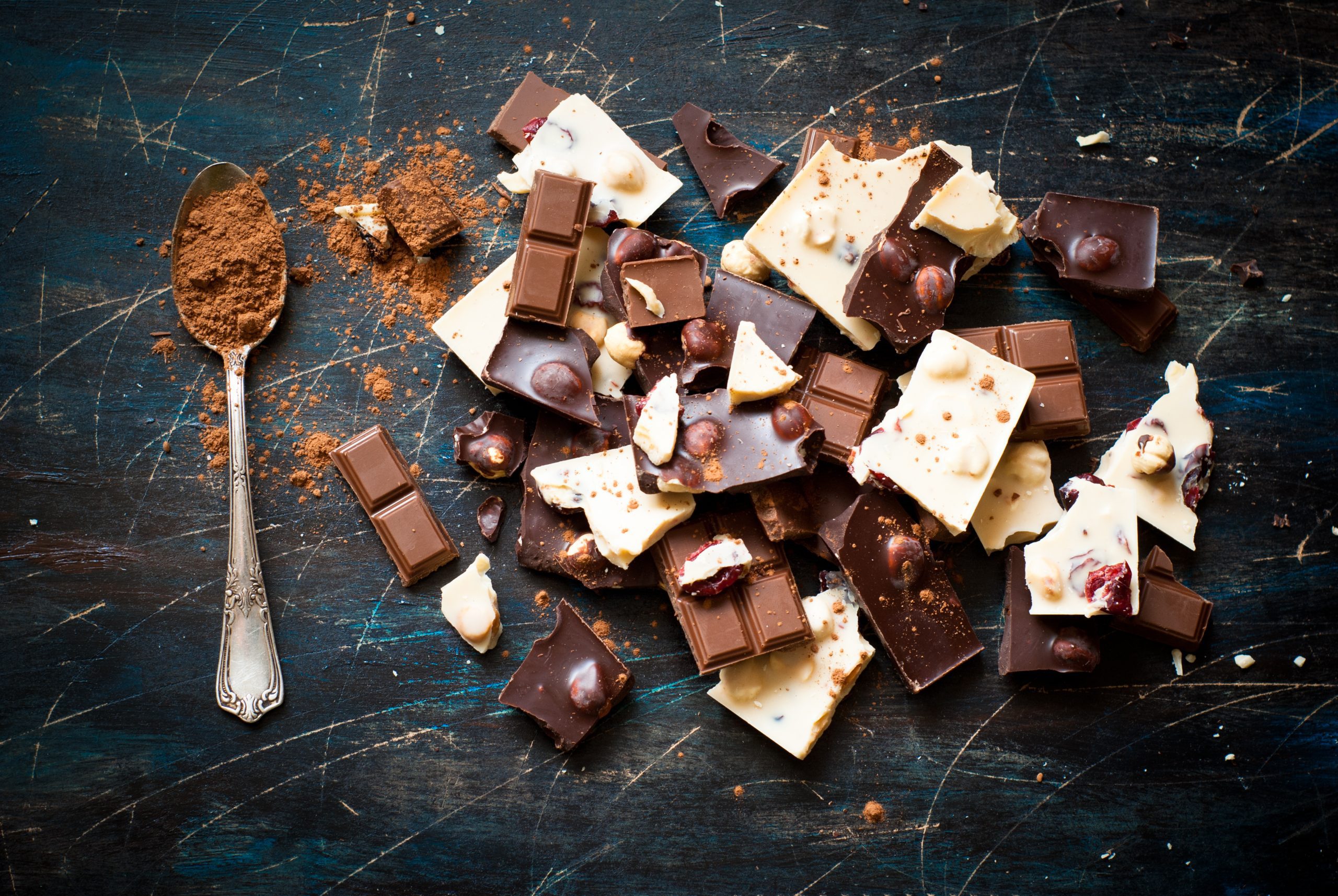
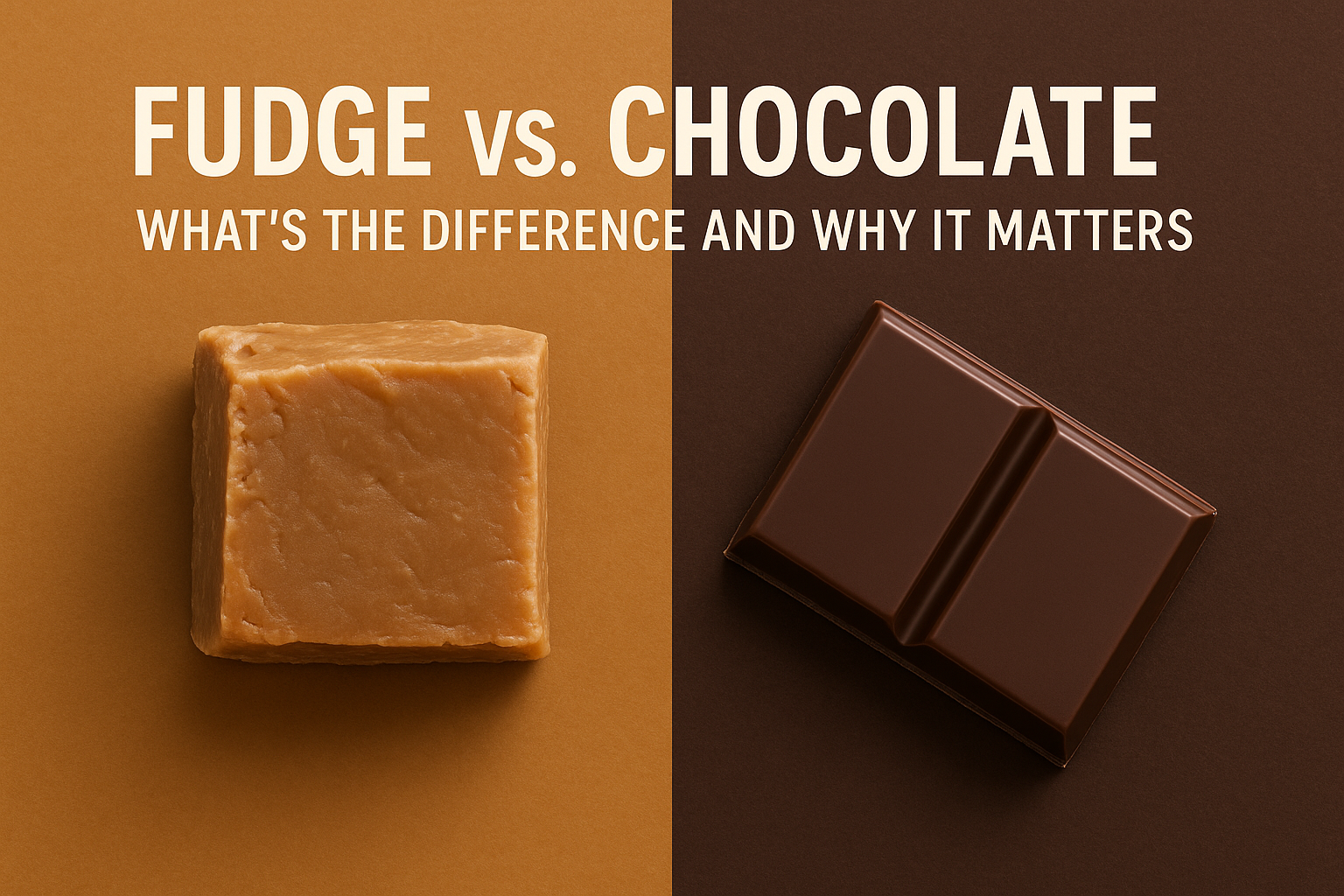
Fudge vs chocolate can look similar on a candy tray, especially when the fudge is chocolate-flavored, but they are not the same thing. The simplest difference is this: fudge is a soft, sugar-based confection with a creamy, dense texture, while chocolate is a cacao-based food built around cocoa solids and cocoa butter. Their ingredients, structure, cooking methods, flavor, and texture are all different.
That distinction matters because a square of chocolate fudge is not simply a softer chocolate bar. Fudge gets its signature bite from controlled sugar crystallization. Chocolate gets its snap, shine, and melt from the way cocoa butter is processed and crystallized. Once you understand what is happening inside each sweet, the difference between fudge and chocolate becomes easy to taste.
At Arndt’s Fudgery, fudge-making has been part of the business since the mid-1980s. That hands-on history gives us a practical way to explain why fudge behaves so differently from chocolate – and why chocolate is only one of many directions fudge can take.
|
Quick answer: What is the difference between fudge and chocolate? Fudge is a confection usually made from sugar, butter or another fat, milk or cream, plus flavorings. Traditional fudge is cooked to the soft-ball stage, cooled, and worked so many tiny sugar crystals form. Chocolate begins with cacao ingredients such as cocoa solids and cocoa butter, usually combined with sugar and sometimes milk. Properly tempered chocolate is firmer, glossier, and has a clean snap; fudge is softer, denser, and creamier. |
Fudge vs Chocolate at a Glance
|
Feature |
Fudge |
Chocolate |
|
Main base |
Sugar, dairy, fat, and flavorings |
Cacao ingredients, especially cocoa solids and cocoa butter |
|
Typical texture |
Soft, dense, creamy, sliceable |
Firm, smooth, often crisp or snappy when tempered |
|
Structure |
Tiny sugar crystals |
Cocoa butter crystal structure |
|
Typical method |
Cook, cool, then beat or work |
Refine/conch; finished chocolate is often tempered |
|
Flavor range |
Chocolate, vanilla, peanut butter, maple, butterscotch, seasonal flavors, and more |
Dark, milk, white, and flavored chocolates |
|
Cocoa required? |
No |
Yes in the form of cocoa solids and/or cocoa butter, depending on the type |
|
Best known for |
Rich creamy candy texture |
Distinct cocoa flavor, smooth melt, and snap |
What Is Fudge Made Of?
Traditional fudge starts with a sweet base built from sugar, butter, milk or cream, and flavoring. Chocolate is a classic choice, but it is optional. Vanilla, maple, peanut butter, butterscotch, nuts, cookies, and seasonal flavors can all be used to create completely different kinds of fudge. For a deeper ingredient breakdown, see our guide to what fudge is made of.
What makes fudge special is not simply the ingredient list. It is the way the sugar is cooked, cooled, and crystallized. Traditional fudge is a crystalline candy. The goal is to create a very large number of very small sugar crystals. If those crystals stay tiny, the fudge feels creamy. If they grow too large, the candy feels gritty.
The Exploratorium’s candy science guide explains that traditional fudge is heated to the soft-ball stage and then cooled before vigorous stirring or beating begins. That controlled timing is what helps produce a smooth texture instead of coarse crystals.
What Is Chocolate Made Of?
Chocolate begins with cacao. Cocoa beans are fermented, dried, roasted, and processed into chocolate components such as cocoa solids and cocoa butter. Those ingredients are combined in different proportions with sugar, and sometimes milk, to create dark chocolate, milk chocolate, white chocolate, and other styles.
The MIT Laboratory for Chocolate Science describes chocolate as a mixture containing cacao material, cocoa butter, sweetener, and, depending on the style, milk solids and other ingredients. In finished bars and molded pieces, tempering helps control the cocoa butter crystals so the chocolate can set with a smooth surface and a clean snap.
This is one of the biggest reasons fudge vs chocolate is more than a flavor comparison. Fudge relies heavily on sugar crystallization. Chocolate relies heavily on cacao solids, cocoa butter, and the crystal behavior of that fat.
Fudge vs Chocolate: 7 Key Differences
1. The Main Ingredients Are Different
The first difference between fudge and chocolate is the foundation of the recipe. Fudge is generally built around sugar, dairy, fat, and flavor. Chocolate is built around cacao ingredients.
That is why chocolate can be an ingredient in fudge without defining the entire category. Chocolate fudge contains chocolate or cocoa for flavor, but peanut butter fudge can be made without chocolate. The same is true for vanilla, maple, butterscotch, and many other fudge varieties.
2. Fudge Is Soft and Dense; Chocolate Is Firm and Snappy
Texture may be the easiest way to identify fudge vs chocolate without reading a label. A well-made piece of fudge should be firm enough to hold its shape and cut cleanly, yet soft enough to bite easily. It feels dense, creamy, and rich.
A tempered chocolate bar is usually firmer. It can break with a distinct snap, then melt smoothly as the cocoa butter warms in your mouth. Fudge tends to feel more substantial and buttery, while chocolate feels thinner and more directly cocoa-driven.
3. They Use Different Candy Science
Fudge and chocolate are both examples of food chemistry at work, but the chemistry is different. Traditional fudge is cooked to roughly the soft-ball stage – around 234 to 240 degrees Fahrenheit – before being cooled and worked. The goal is controlled crystallization of sugar.
Chocolate tempering is about controlling cocoa butter crystals. Proper tempering creates the stable structure associated with gloss, a clean break, and a smooth melt. So while both candies depend on crystal formation, they are controlling different materials for different results.
4. The Flavor Balance Is Different
Chocolate flavor comes directly from cacao and can range from milky and sweet to dark, roasted, bitter, fruity, or earthy depending on the beans and formulation. Cocoa percentage, sugar, milk, roasting, and processing all influence the final taste.
Fudge is usually sweeter and more buttery or creamy because sugar and dairy play a larger role in the base. Chocolate fudge still has cocoa depth, but it is rounded by the richer candy base. Non-chocolate fudge can move into completely different flavor families, which is why the category is so flexible.
5. Fudge Has a Wider Non-Chocolate Flavor Range
Chocolate itself can be flavored in many ways, but fudge has an unusually broad canvas because it does not require cocoa. At Arndt’s Fudgery, the fudge flavor selection includes classic chocolate styles as well as peanut butter, maple, vanilla, butterscotch, and many creative combinations.
That versatility is one reason people sometimes misunderstand what fudge is. Chocolate fudge may be the most familiar version, but the candy-making method – not the presence of chocolate – is what makes it fudge.
6. They Melt and Soften Differently
Chocolate is especially sensitive to heat because cocoa butter melts close to body temperature. A chocolate bar can go from crisp to glossy and soft surprisingly quickly in a warm hand or room.
Fudge can also soften in heat, but its structure is not identical because sugar, dairy, and other fats contribute to the set. Exact behavior depends on the recipe. For the best texture, follow the maker’s storage instructions and keep fudge protected from excess heat, humidity, and air.
For practical storage guidance, read How to Store and Preserve Fudge for Maximum Freshness.
7. They Shine in Different Uses
Chocolate is one of the most versatile ingredients in baking and confectionery. It can be molded, dipped, grated, melted into ganache, folded into dough, or eaten as a bar. Its cocoa intensity makes it ideal when you want chocolate flavor to be the star.
Fudge is often best enjoyed as the finished candy itself. It is easy to slice, share, box, gift, or serve on dessert trays. It also works well when you want a richer, creamier bite than a standard chocolate piece. Neither is universally better; they simply deliver different experiences.
Is Fudge Chocolate? Not Quite
If someone asks, “Is fudge chocolate?” the most accurate answer is no. Fudge is a category of confection, and chocolate is one possible flavor or ingredient within that category. Chocolate fudge combines the two, which is why the terms are often confused.
Think of it the same way you might think about chocolate ice cream. Chocolate can flavor the ice cream, but the dessert is still ice cream. In the same way, chocolate can flavor fudge, but the finished candy is still fudge because of its base and structure.
Chocolate Fudge vs Chocolate: Why They Still Taste Different
Chocolate fudge and a chocolate bar may share cocoa ingredients, but the ratios and structure change the eating experience. Chocolate fudge adds the dense sweetness and creaminess of fudge to the cocoa flavor. A chocolate bar puts more emphasis on the cacao and cocoa butter system itself.
That is why chocolate fudge often tastes rounder, sweeter, and more dessert-like, while dark or semisweet chocolate can taste sharper, more roasted, and more bitter. Milk chocolate sits closer to fudge on the sweetness spectrum, but the texture and manufacturing process remain distinct.
Which Should You Choose: Fudge or Chocolate?
Choose fudge when you want a soft, rich, creamy candy with a wide range of flavors. Choose chocolate when you want a firmer bite, more concentrated cocoa character, or a versatile ingredient for coating and baking. If you love both, chocolate fudge gives you cocoa flavor with the signature texture of fudge.
If you want to taste the difference rather than just read about it, browse our fudge collection and compare a classic chocolate flavor with peanut butter, maple, vanilla, or another non-chocolate favorite.
A Fudge Maker’s Perspective: Why Texture Matters Most
For a fudge maker, the most important difference is not the name on the flavor card. It is texture. Good fudge should be smooth rather than sandy, dense rather than airy, and soft enough to bite without becoming sticky or runny. That comes from controlling heat, moisture, cooling, and crystallization.
Arndt’s Fudgery has been making its own fudge since the mid-1980s, and the company’s roots in Newton, Illinois go back to 1913. You can read the Arndt’s Fudgery history to see how fudge became an important part of the business.
That experience is also why a simple fudge vs chocolate comparison should go beyond “soft versus hard.” The texture tells you how the candy was built. One is a carefully crystallized sugar confection; the other is a cacao-based food whose fat crystal structure drives the familiar snap and melt.
Frequently Asked Questions About Fudge vs Chocolate
Is fudge the same as chocolate?
No. Fudge is a soft confection usually made from sugar, dairy, fat, and flavorings. Chocolate is made from cacao ingredients such as cocoa solids and cocoa butter, usually with sugar and sometimes milk. Chocolate can be used to flavor fudge, but the two are different foods.
Does all fudge contain chocolate?
No. Fudge can be chocolate-flavored, but it can also be made in vanilla, peanut butter, maple, butterscotch, and many other flavors. Chocolate is optional in many fudge recipes.
Why is fudge softer than chocolate?
Traditional fudge contains a network of tiny sugar crystals in a rich sugar-and-dairy base. Chocolate depends more on cocoa butter crystal structure. Those different structures create very different textures: creamy and dense for fudge, firm and snappy for well-tempered chocolate.
What is chocolate fudge made of?
Chocolate fudge is usually made from a fudge base containing sugar, fat, and dairy plus chocolate, cocoa, or both for flavor. Recipes vary, so check the actual fudge ingredient information when you need allergen or product-specific details.
Is hot fudge the same as regular fudge?
No. Hot fudge is a pourable chocolate dessert sauce, usually served warm over ice cream or other desserts. Regular fudge is a set candy that is cooled and cut into pieces. They share a name and can share chocolate flavor, but their textures and uses are very different.
Which is sweeter, fudge or chocolate?
Fudge is often sweeter because sugar is a major part of its structure, while chocolate can range from very sweet to intensely dark and bitter. The exact answer depends on the recipe and the type of chocolate being compared.
Can fudge be made without cocoa?
Yes. Cocoa is not required for fudge. Peanut butter, vanilla, maple, butterscotch, and many other flavors can be made without cocoa, which is one of the clearest reasons fudge should not be treated as another name for chocolate.
The Bottom Line
The real difference in fudge vs chocolate comes down to what each sweet is made from and how its structure is created. Fudge is a creamy, sugar-based confection whose smooth texture depends on tiny sugar crystals. Chocolate is a cacao-based food whose flavor and texture depend heavily on cocoa solids, cocoa butter, and processing such as tempering.
Chocolate fudge brings the two worlds together, but it is still unmistakably fudge: softer, denser, sweeter, and built for that rich, creamy bite. Once you know what to look for, the difference is easy to see – and even easier to taste.
Ready to compare for yourself? Shop Arndt’s Fudgery fudge and explore classic chocolate plus dozens of other flavor ideas.