Latest Blogs
If you’re wondering “Is rock candy Amish?” here’s the honest answer:
Rock candy is not exclusively Amish.
But it is a classic, old-fashioned candy that matches the simple, traditional style many people associate with Amish-made sweets.
So why do so many shoppers see (or search for) “Amish rock candy”? Let’s unpack what’s true, what’s assumed, and how to tell what you’re actually buying.
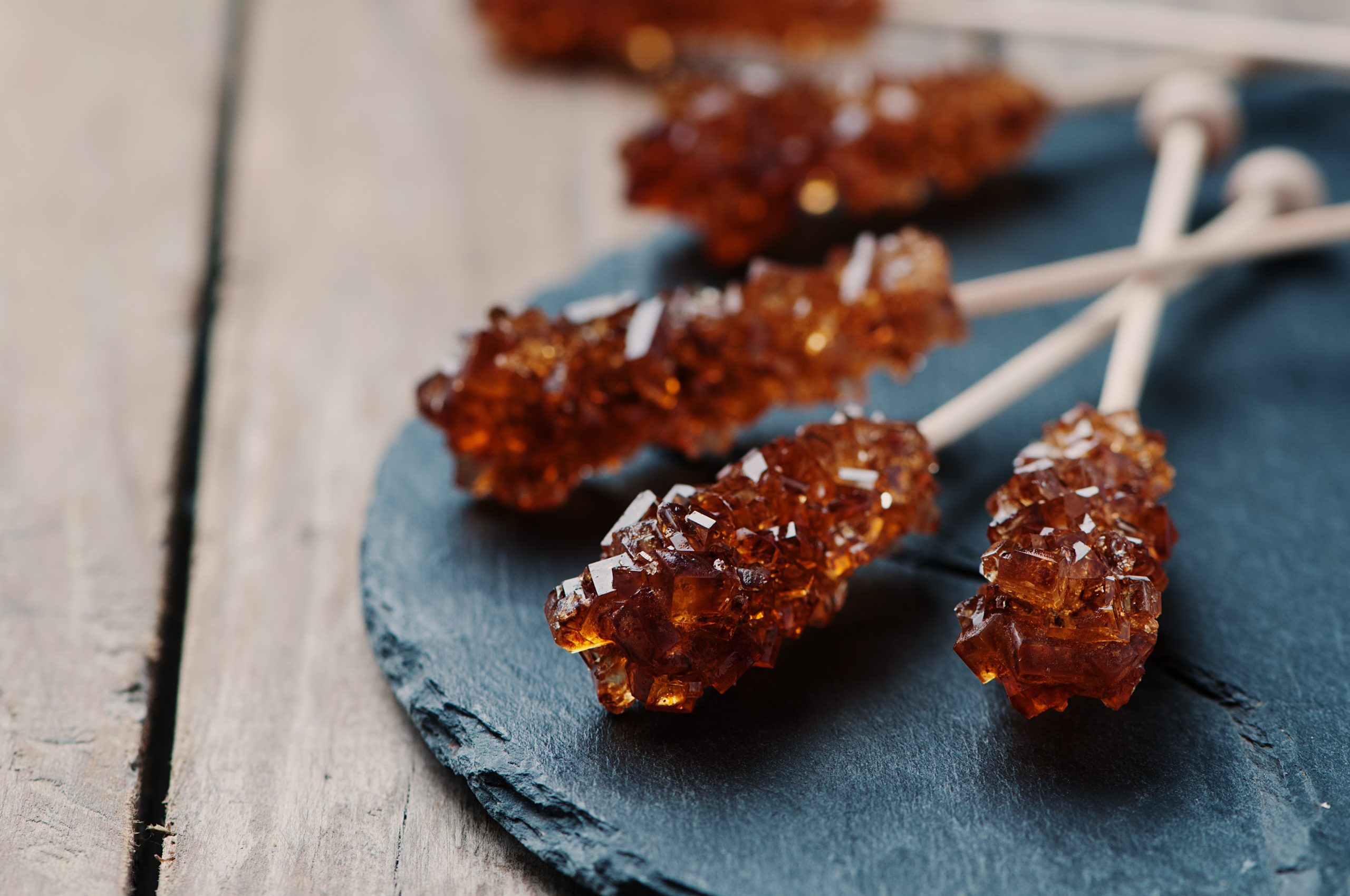
Quick Answer: Is Rock Candy Amish?
Not by definition. Rock candy is a traditional sugar crystal candy made in many places around the world.
But in practice: rock candy is often sold in country stores and traditional-style markets, including some shops in Amish country—so the association makes sense.
What Does “Amish Candy” Actually Mean?
There isn’t an official category of “Amish candy.” Usually, when people say a candy is “Amish,” they mean one (or more) of these things:
- It’s made in small batches
- It uses simple ingredients
- It’s traditional / old-fashioned
- It’s sold in an Amish country store (even if it wasn’t made by the Amish)
- It looks and tastes like something that could have been made generations ago
That last point matters: a lot of “Amish” labeling online is really shorthand for traditional, handcrafted-style food.
What Is Rock Candy Made Of?
Rock candy is one of the simplest sweets you can make. The base recipe is:
- Sugar
- Water
Optional additions:
- Natural or artificial flavoring (peppermint, cinnamon, fruit)
- Coloring
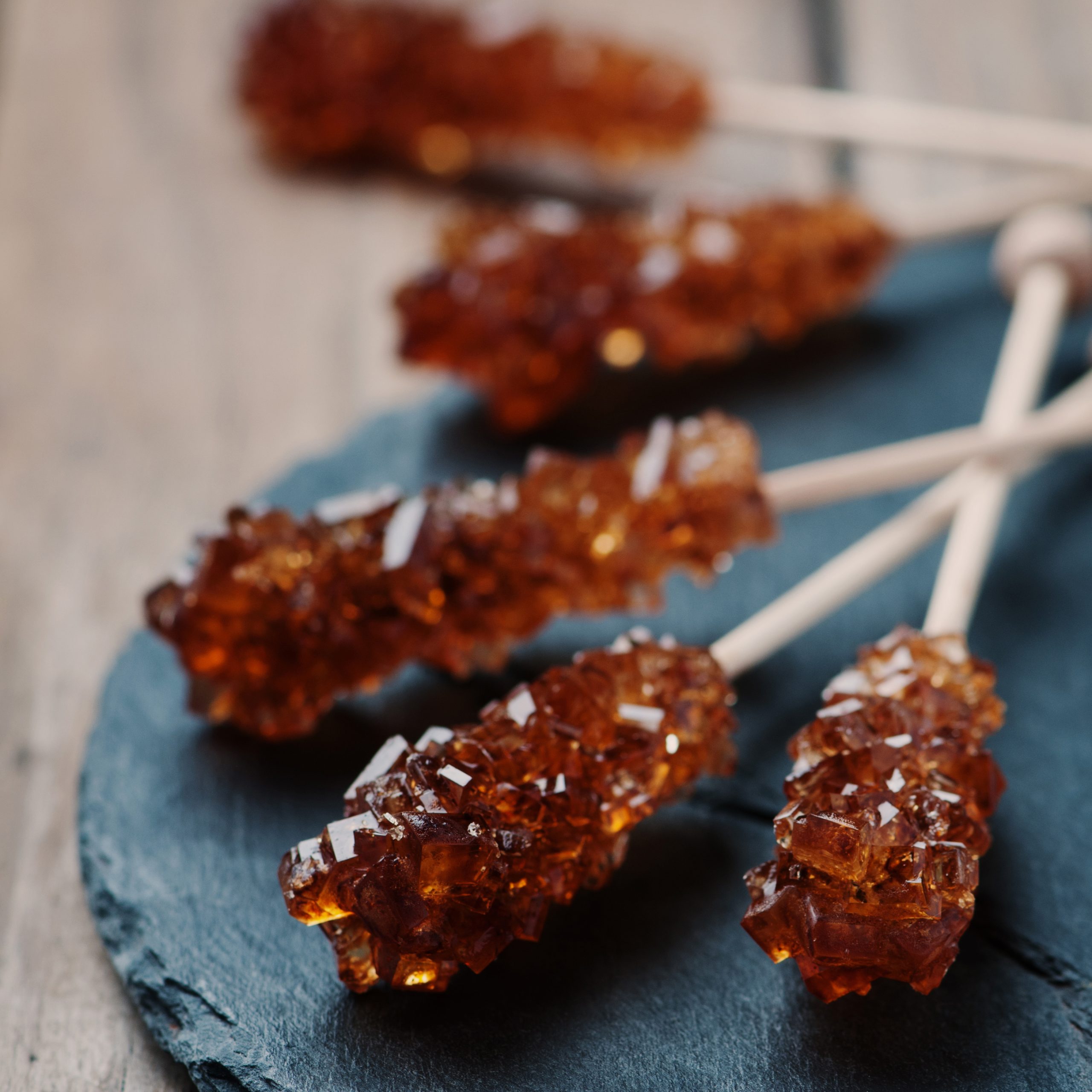
Rock candy is made by dissolving sugar into hot water to create a concentrated syrup. Over time, sugar crystals form as the mixture cools and evaporates—creating the iconic “rock” look.
That slow, hands-on process is a big reason it feels Amish.
Why Rock Candy Feels “Amish” (Even When It Isn’t)
1) It’s old-fashioned by nature
Rock candy isn’t a modern invention. The method—crystallizing sugar—has been around for a very long time, which aligns with the Amish preference for traditional food-making.
2) It’s simple and minimal
Many people associate Amish cooking with straightforward ingredients and minimal processing. Rock candy’s base recipe fits that expectation.
3) It’s craft-focused, not factory-focused
Even when produced commercially, rock candy is still fundamentally a process candy—it’s about crystal growth. That craftsmanship vibe matches what shoppers look for in Amish-style treats.
Do Amish People Actually Make Rock Candy?
Sometimes—depending on the shop and the supplier.
In some Amish regions, you’ll find rock candy sold in:
- country stores
- general stores
- gift shops
- bulk candy displays
But rock candy being sold in Amish country does not automatically mean it was made by Amish families.
A more accurate way to phrase it is:
- “Rock candy is commonly sold in Amish-style markets.”
- “Some rock candy may be produced locally or in small batches.”
- “Some may be sourced from outside vendors.”
How to Tell If Rock Candy Is Amish-Made
If your goal is to buy candy that’s truly Amish-made (or at least small-batch/local), here are practical checks:
1) Look for a maker name (not just “Amish-style”)
“Amish style” is often a marketing phrase. “Made by ____” is much more meaningful.
2) Check the ingredient list
If it’s just sugar + water + flavoring, that’s straightforward. If you see a long list of stabilizers, preservatives, and multiple additives, it’s more likely mass-produced.
3) Ask where it was made
Shops that truly source locally will usually tell you:
- who makes it
- where it’s made
- whether it’s small batch
4) Look for small-batch cues (without assuming)
Handmade doesn’t always mean “Amish,” but cues include:
- limited flavor selection
- seasonal batches
- locally branded packaging
- “made in-house” signage
Is Rock Candy “Amish-Friendly” in Ingredients and Values?
Many Amish families make buying decisions based on community norms, household preferences, and local Ordnung (guidelines). Rock candy can align with Amish preferences because it can be:
- very simple
- homemade
- made without modern processing
That said, colors and flavors vary:
- Some rock candy uses artificial dyes/flavors
- Others use simpler flavorings (like peppermint/cinnamon)
If you’re shopping for the most “traditional” option, look for:
- clear or lightly colored crystals
- simple flavors
- short ingredient lists
Why People Search “Amish Rock Candy” So Often
Most searchers aren’t doing academic research—they’re shopping (or browsing) with a specific vibe in mind:
- “I want old-fashioned candy.”
- “I want something handmade.”
- “I want a nostalgic treat that looks traditional.”
- “I saw this in an Amish country store—what’s the story?”
So the keyword is less about exclusivity and more about a style and expectation.
Rock Candy as a Traditional Gift (and Why It Still Ranks Today)
Rock candy stays popular because it’s:
- visually striking (crystals!)
- nostalgic
- shelf-stable
- easy to gift (especially on sticks or in jars)
It also works well for themed occasions like:
- party favors
- candy buffets
- old-fashioned candy boxes
- holiday stockings
FAQs
Is rock candy an Amish invention?
No. Rock candy exists in many cultures and regions. The “Amish” association is usually about how it’s sold and the traditional style it represents.
Why do some stores call it Amish rock candy?
Often, it’s a way to describe a traditional or old-fashioned candy style—especially if it’s sold in Amish country or country stores.
Can rock candy be homemade?
Yes. At its core, it’s sugar + water + time. Many people make it at home because the process is simple (though it requires patience).
Is rock candy considered old-fashioned candy?
Yes—rock candy is widely considered a classic old-fashioned sweet because of its traditional method and simple ingredients.
Conclusion: So… Is Rock Candy Amish?
Rock candy isn’t exclusively Amish, but it fits the “Amish-style” candy image because it’s traditional, simple, and craft-based.
If you’re buying rock candy and want the most authentic “Amish-made” experience, focus on who made it, where it was produced, and how transparent the shop is about sourcing.
Check out our Facebook page!